
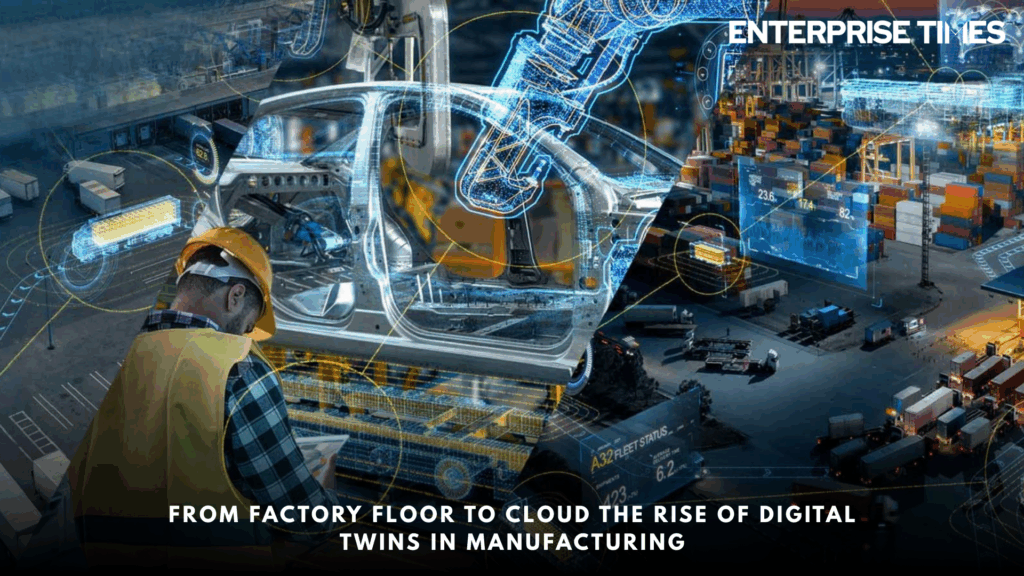
In the past, the factory floor was a place of tangible activity machines humming, workers operating equipment, and production lines running in sync. Today, that same floor extends far beyond its physical boundaries. Thanks to the evolution of digital twin technology, manufacturers are now replicating entire factories, systems, and machines in the cloud bridging the gap between the physical and digital worlds. This convergence marks a new era of industrial transformation, where data becomes the lifeblood of efficiency, innovation, and resilience.
Understanding the Digital Twin Revolution
A digital twin is a dynamic, virtual replica of a physical object, process, or system that continuously updates using real-time data from sensors, IoT devices, and analytics platforms. These digital replicas simulate the behavior and performance of their real-world counterparts, enabling organizations to monitor, predict, and optimize operations without physical intervention.
Originally conceptualized by NASA for spacecraft simulation, digital twins have evolved into a central pillar of Industry 4.0. In manufacturing, this means that every machine, assembly line, and even the entire factory ecosystem can now exist virtually — generating insights that were once impossible to obtain.
The Shift from Factory Floor to Cloud
The traditional factory relied heavily on human expertise, manual data collection, and scheduled maintenance. But as industries became more complex and competitive, manufacturers needed real-time visibility and predictive capabilities that exceeded human capacity.
Enter the cloud-enabled digital twin, the engine driving this transformation.
Through advanced connectivity (IoT sensors, 5G, and edge computing), manufacturers now feed data from their machines and systems into cloud-based platforms where digital twins live and evolve. These virtual models mirror the physical factory environment, continuously updating as new data arrives.
This integration delivers a powerful shift:
- Real-time monitoring of assets and production lines
- Predictive maintenance that reduces downtime
- Simulation and testing of new production scenarios
- Optimization of workflows and resource utilization
In essence, the digital twin has turned the traditional, reactive factory into a smart, self-learning ecosystem.
How Digital Twins Work in Modern Manufacturing
The operation of a digital twin involves a continuous feedback loop between the physical world, the digital world, and data analytics.
- Data Capture – Sensors and IoT devices installed on machines capture parameters such as temperature, vibration, pressure, energy consumption, and operational speed.
- Data Integration – This data is transmitted via secure networks into a centralized cloud platform.
- Modeling and Simulation – The digital twin uses AI and machine learning algorithms to simulate real-time behavior, predict potential failures, and suggest optimal performance settings.
- Analysis and Optimization – Engineers and decision-makers interact with dashboards and predictive models to test “what-if” scenarios, refine production strategies, and implement changes back into the real environment.
This closed-loop system ensures that every insight translates directly into operational improvement, creating a self-optimizing manufacturing process.
Applications Transforming the Industry
Digital twins are no longer confined to concept or pilot projects. They are reshaping real-world manufacturing in multiple dimensions:
1. Predictive Maintenance
By analyzing sensor data, digital twins can predict equipment failures before they occur. Manufacturers like Siemens and GE have achieved 30–40% reductions in downtime through predictive maintenance powered by digital twins.
2. Product Design and Testing
R&D teams use digital twins to simulate how a new product will perform under different conditions without having to build physical prototypes. This drastically shortens the design-to-production cycle and reduces costs.
3. Supply Chain Optimization
Digital twins of supply chains can model logistics, transportation delays, and supplier risks. Manufacturers gain full visibility and can make proactive adjustments to avoid disruptions.
4. Workforce Training
Through virtual models, operators can train on digital replicas of real machinery gaining hands-on experience without risking expensive downtime or damage.
5. Sustainability and Energy Efficiency
By monitoring resource consumption, digital twins enable manufacturers to identify waste, optimize energy use, and achieve sustainability goals. They are key enablers of green manufacturing strategies.
Case Studies: Industry Leaders in Action
Siemens Digital Industries
Siemens’ “Digital Enterprise Suite” combines digital twins of products, production processes, and performance. Their smart factory in Amberg, Germany, operates with 99.99885% production quality achieved through continuous digital twin optimization.
General Electric (GE)
GE’s “Predix” platform uses digital twins to monitor and analyze equipment across industries from jet engines to wind turbines. In manufacturing, GE reports 20% faster maintenance response and significant cost savings.
Tesla
Tesla’s manufacturing plants rely heavily on digital twin simulations to manage production lines, track performance, and update vehicles through over-the-air data turning every Tesla car into a live, evolving digital entity.
Unilever
Unilever’s “digital twin factories” combine IoT, AI, and analytics to monitor 300 production lines globally. The result: 3%–5% improvement in production efficiency and reduced environmental impact.
The Role of Cloud and AI in Scaling Digital Twins
Cloud computing is the backbone of digital twin scalability. Without it, the vast volumes of sensor data would overwhelm on-premises systems. The cloud allows real-time synchronization between physical assets and their digital counterparts, enabling instant analytics across global operations.
Meanwhile, Artificial Intelligence and Machine Learning are the brain of digital twins. These technologies enable predictive modeling, automated decision-making, and self-learning systems that continuously improve with every data point.
For example, an AI-powered digital twin can detect subtle performance deviations that a human engineer might overlook and autonomously adjust machine parameters to maintain efficiency.
Challenges in Implementation
Despite their enormous potential, digital twins are not without hurdles.
1. Data Security and Privacy
As manufacturing data moves to the cloud, cybersecurity becomes paramount. Sensitive production data must be protected against breaches and industrial espionage.
2. Integration Complexity
Bringing together legacy equipment, different software systems, and new IoT platforms can be challenging — especially for traditional factories.
3. High Initial Investment
Developing and integrating digital twin technology requires upfront capital for sensors, connectivity, and skilled personnel. However, the long-term ROI often justifies the investment.
4. Skills Gap
A shortage of data scientists and industrial AI experts remains a major bottleneck. Manufacturers must invest in digital upskilling for their workforce.
The Future of Manufacturing: Intelligent Ecosystems
The rise of digital twins is part of a larger industrial shift toward connected intelligence. The future factory will not just be smart it will be autonomous, capable of making real-time decisions based on millions of data interactions.
- Edge computing will handle real-time analytics closer to the factory floor, reducing latency.
- 5G connectivity will enhance communication between machines and cloud systems.
- Metaverse and AR/VR tools will provide immersive visualizations of factory data and processes.
- Sustainability analytics will help measure and minimize environmental impact at every stage of production.
In this ecosystem, the physical and digital worlds are indistinguishable continuously feeding and improving each other.
Conclusion
The journey from the factory floor to the cloud marks one of the most profound transformations in modern manufacturing. Digital twins have redefined how we design, operate, and sustain industrial systems. They offer not only visibility and efficiency but also resilience and the ability to adapt and thrive in an unpredictable global economy.
As manufacturers embrace these technologies, the line between physical operations and digital intelligence will blur even further. The winners in this new industrial era will be those who can harness data, simulate innovation, and make smarter decisions before reality even happens.