
1. Please introduce yourself and your journey as an Educator, to our readers, and also tell us what inspired you to pursue this career?
Think back to the last five conferences you attended. Did you notice that the speakers were mostly men? Male keynote speakers and ‘manels’ (panels made up entirely of male panellists) are ubiquitous. Even in sectors that are dominated by women, such as education, a conference may still have more male than female speakers. I want to change this.
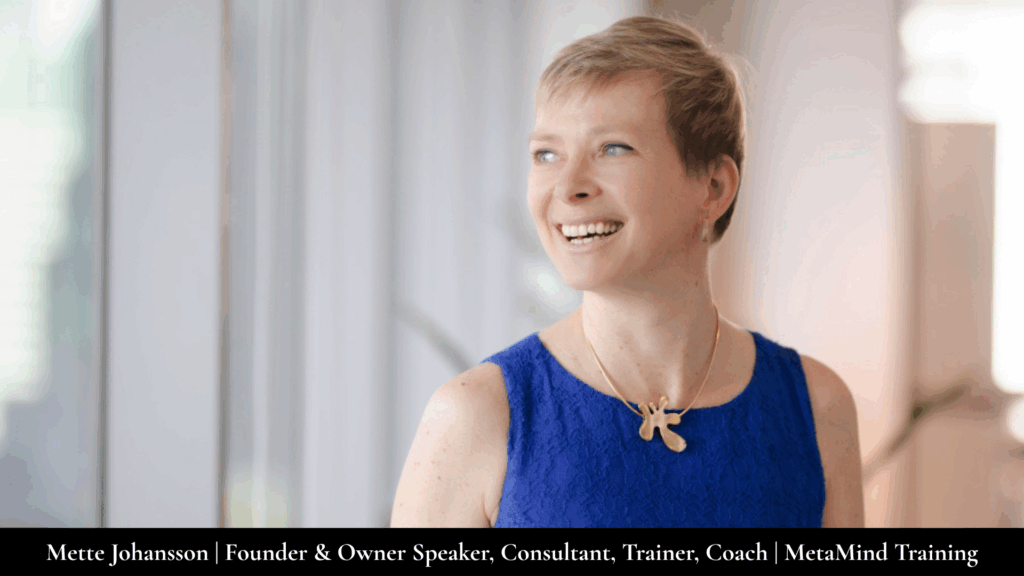
I’m Mette Johansson, the founder and chair of KeyNote Women Speakers, and I am on a mission to bring more diversity to speaking stages. KeyNote is a global, non-profit initiative led entirely by volunteers. We focus on increasing awareness of the benefits of having gender balance on stage; making current, inspirational, non-male speakers more visible; and training many more women to speak up in front of an audience.
Training women to speak up is very rewarding. I believe they have great potential for being motivational speakers. Firstly, many women are highly purpose driven – some might be reluctant, introvert speakers, but they overcome this because they have a message with which they want to change the world. When you speak because you want the audience to learn, be inspired, or even change the world, you’re a great potential speaker. Some male speakers are over confident and driven by more selfish purpose – audiences can sense this and are becoming less inspired by egos. Secondly, our trainee speakers become so brave in speaking in front of audiences with just the smallest nudge. This is one of the reasons for the lack of diversity often quoted by conference organisers: women don’t want to speak or don’t have the confidence to speak and, of course, courage is needed to go on stage. However, we have found through our training programme that courage and confidence can be developed. At the end of their training, participants confidently tell amazing and fascinating stories from stage. Perhaps still with butterflies in their tummies, but at least those butterflies are ‘flying in formation’ – to use a beautiful metaphor that one of my mentors likes to use. As strong believers in life-long learning, we of course also provide training for existing speakers. In fact, as a speaker, if you don’t improve, you may as well pack your bags. The audience will not return if you stay on the same level your entire life. Our advantage: we have a community of amazing speakers, who are also keen to teach as well as learn from each other. This hunger for continuously sharpening your sword and a community spirit of experts means we have created an optimal environment for peer learning.
What started off as an idea and time invested by one woman has swiftly turned into a global movement with dozens of volunteers. We’re very inspired to make a difference, which is reinforced every time we see that we are moving the needle on diversity and inclusion, especially in the gender-equality area.
Consider: Today, KeyNote is a global movement. We have speakers present in North America, Europe, Asia, Australia, and the Middle East. It is immensely gratifying that in some countries, cultures and societies, strides have been made so that awareness about the importance of strong, realised and confident women exists and empowers everyone. However, there are many other countries, cultures and societies where women are still struggling against oppressive systemic imbalances. It is in these regions that our work is most needed. International exposure and role modelling that our speakers provide to trainees in these regions is incredible. Our speakers learn best practices and strategies from each other. In this manner, we are able to empower women to bridge the gap, even in regions where women empowerment is still in nascent stages. This will, in turn, greatly benefit the local ecosystems through strong, vocal, confident women creating a ripple effect with their new skills. In our view, expanding perspectives and empowering skilled labour is of profound importance to communities worldwide.
A side effect of our training programme is that women who have participated are not only becoming inspirational thought leaders speaking from a stage, they also speak up confidently, more frequently, and with high impact in other environments. This can be in business, academia, government – and even in private with friends and family!
We create safe spaces for women to explore their speaking style. Let’s face it: the business world, academia and politics have been designed by men for men. Often, women are expected to play by rules that don’t suit them. We create a safe community where women can explore impactful, effective and inspirational communication without being ruled by how the other gender defines it. This means that in addition to teaching speaking skills, we are letting participants find their authentic selves, their voices, and their confidence.
Globalisation, hyper connectivity, greater awareness and interest in the diversity and inclusion movement, as well as the widespread availability of information are important trends to take into account. A few decades ago, you would have few global speakers. Today, top speakers want to be relevant to the world, and they travel accordingly. Also, it has become so much easier for speakers to inspire in all corners of the world. We increasingly conduct webinars that not only make the learning of our speakers and trainee speakers global – the trainers, who, in our case, are highly experienced and professional speakers, also have the opportunity to learn more about different regions. We have been able to build a pioneering, highly impactful, global community in just two years!
It is a challenge to run a fully volunteer-based and non-profit speaker directory, let alone the high-calibre learning programmes we designed and are constantly improving. The best we can do is what we do as motivational speakers: inspire others to follow us on our mission. Would we like to have funding to hire full-time staff? Certainly so. Then again, the team has built world-class speaker training in a record period of time – we can be proud of this!
I see most influencers as educators. By inspiring us to follow their way, they are educators. And the power of role modelling is often underestimated. At KeyNote, recognising the accomplishments of our speakers and celebrating them is an important part of the work we do. In doing so, we encourage, inspire and motivate others searching for their own paths.
We have worldwide plans to continue this movement until there is a true diversity on stages – which doesn’t just mean more people who look like me, of course. We want inclusivity – for everyone who is under-represented on a speaking stage today. To achieve this, we will fortify our presence in the Americas, EMEA, and APAC.